
Drone warfare isn’t evolving. It has already broken through the old order, and the battlefield is the proof. Ukraine burns through drones by the hundreds every day. Houthi operators in the Red Sea adapt in weeks. Israel fields AI-coordinated swarms.
Meanwhile, U.S. forces in CENTCOM face what Gen. Michael Kurilla called “the most intense drone combat environment in the world.” The lesson is simple. Whoever builds faster, fields more, and adapts quicker wins. As of December 2025, the United States, NATO, and Ukraine have finally decided to act on that truth.
The Pentagon’s Pivot From Precision to Volume
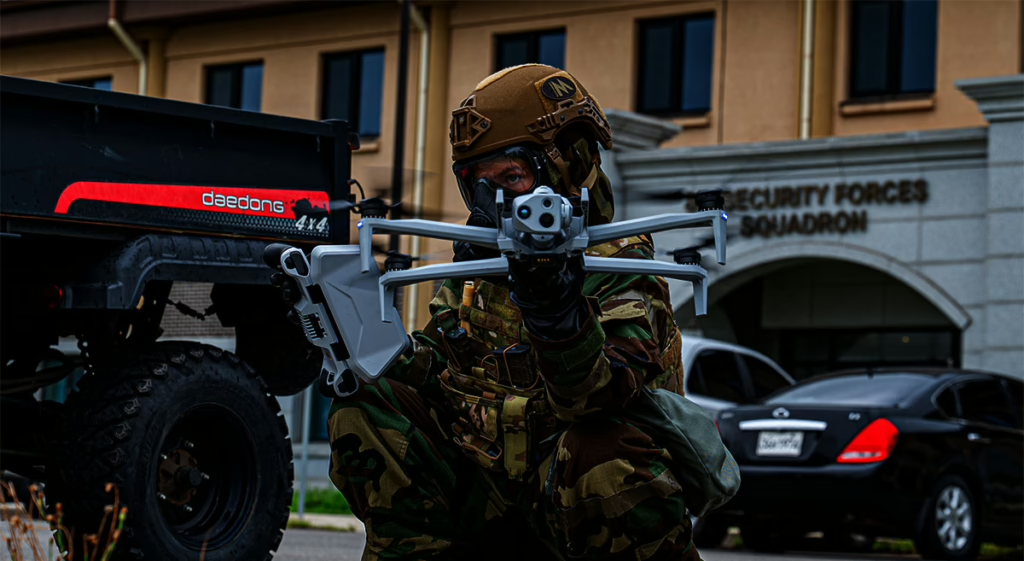
The Pentagon’s new Drone Dominance Program (DDP), announced December 2, is the first U.S. program designed for the battlefield as it actually exists, not as the acquisition system wishes it were. War Secretary Pete Hegseth captured it bluntly.
We are done admiring the problem. It’s time to build the scale required to fight tonight.
This is the most honest acknowledgment yet of what Ukraine and the Red Sea have exposed: exquisite systems don’t stop $500 FPV drones, and they never will.
DDP is built for volume, not elegance. The program aims for 340,000 attritable Group 1 and Group 2 drones by 2028, with the first 30,000 arriving by July 2026. Four escalating phases and a series of “Gauntlet” competitions will determine which vendors can build cheap, lethal drones at an industrial pace. The Pentagon wants the price per unit to be under $1,000 and is forcing vendors to take on the risk, paying them only when drones are operational. No more years-long R&D cycles. No more gold-plated requirements.
The rationale is battlefield-driven. Hegseth again.
Ukraine showed us what cheap drones can do when fielded in mass. The United States must out-produce and out-adapt any adversary.
This is a wartime production mindset, closer to WWII Liberty Ships than to the last 20 years of defense procurement. The drones themselves reflect that mindset. Two-kilo payload. Ten-kilo strike range. Basic autonomy. Commercial components. No stealth. No classified sensors. Just speed, volume, and attrition resistance. CENTCOM will be the first to feel the impact. With Task Force Scorpion Strike preparing operational tests across the Middle East, the goal is clear: to saturate the battlespace with drones that can scout, strike, and overwhelm, not one at a time, but in waves.
Innovation at the Speed of War
While the U.S. industrializes drone production, NATO and Ukraine are fusing battlefield lessons into alliance capability. The UNITE – Brave NATO program, launched on November 26, is the Alliance’s first co-funded innovation accelerator with Kyiv. NATO Secretary General Mark Rutte framed it plainly.
Innovation at the speed of war is now a collective responsibility.
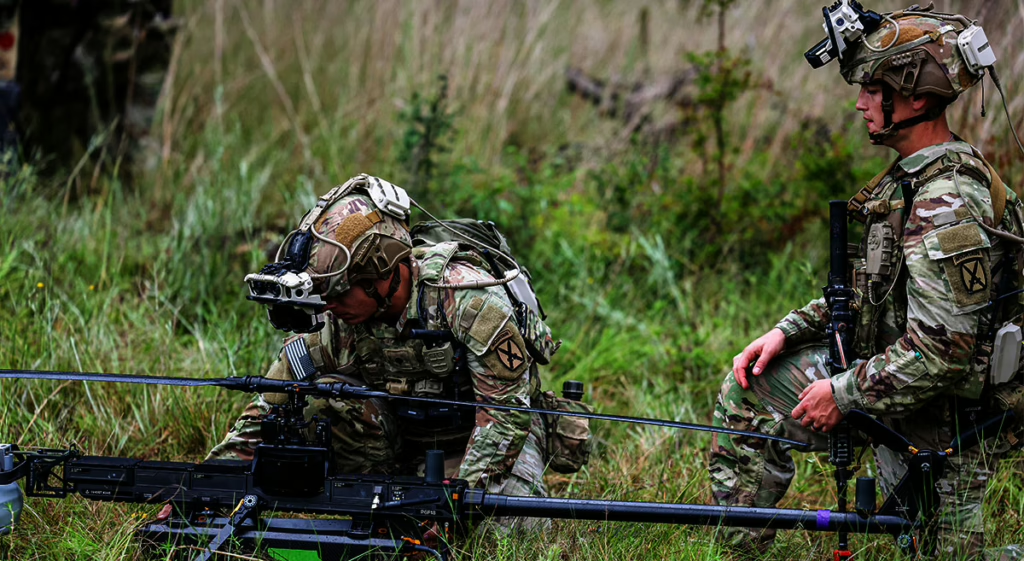
UNITE is small in funding €10 million in the first round, but enormous in strategic effect. It acts as a bridge between Ukraine’s battlefield tech and NATO’s institutional muscle. Grants up to €500,000 will scale combat-proven counter-drone systems, secure communications, and EW-resistant networks. The focus is interoperability and survivability, not theoretical research.
Ukraine’s Deputy Defense Minister Ivan Havryliuk captured the frontline reality better than any report could.
Drones are now the first wave of every attack and the last defense against every attack.
This is why NATO wants Ukrainian prototypes inside DIANA test centers and eventually inside NATO supply chains. Ukraine isn’t experimenting with drones. It’s living inside a drone-defined war every day. The Alliance is finally acknowledging that experience as a strategic asset.
Early applicants include Aerorozvidka and several drone-EW hybrid teams working on portable jammers, mesh radios, and SIGINT tools that already survive Russian interference. If successful, UNITE could push more than twenty systems into NATO stocks by 2027, creating the first “Ukraine-proofed” alliance technology pipeline.
The New Reality
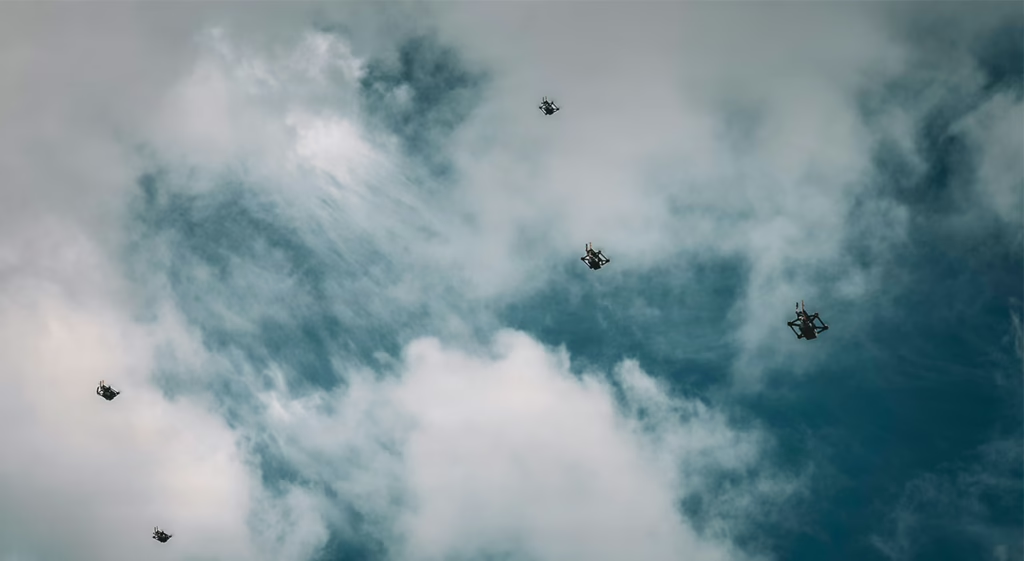
Both programs point to the same conclusion: drones have become a form of ammunition. They are consumable, replaceable, and essential. A Ukrainian drone commander captured the shift with brutal clarity earlier this year.
If it’s cheap and it flies, we use it. If it’s expensive, we use something cheaper.
This is the mindset driving the next era of warfare. Not silver bullets. Not exquisite platforms. Industrialized drone ecosystems that can out-produce and out-adapt the enemy.
DDP and UNITE are the first attempts to build that ecosystem at scale. They won’t be the last. The nations that dominate drone industrialization will dominate the next decade of conflict. Not because their drones are the best, but because they will have the most and can replace them faster than the enemy can shoot them down.
The battlefield has already moved. Now the industrial base is finally catching up.
